Choose other country to get service
Dolby Vision 2 Explained: The New HDR Standard Coming In 2026
2026-02-25
2026-02-25
Share


Dolby Vision 2 is Dolby’s next-gen HDR format, revealed at CES 2026, built to make premium HDR look more consistent across real TVs in real rooms. Viewers can expect cleaner dark scenes, punchier highlights that stay detailed, and a more consistent picture as room lighting changes.
Dolby Vision 2 uses creator-guided, scene-by-scene processing to match brightness, colour, and contrast to what your TV can actually deliver. This keeps HDR looking steady in real rooms where lighting changes across the day. There are two tiers. Dolby Vision 2 is the core format, while Dolby Vision 2 Max is aimed at higher-end displays that can deliver the most complete experience.
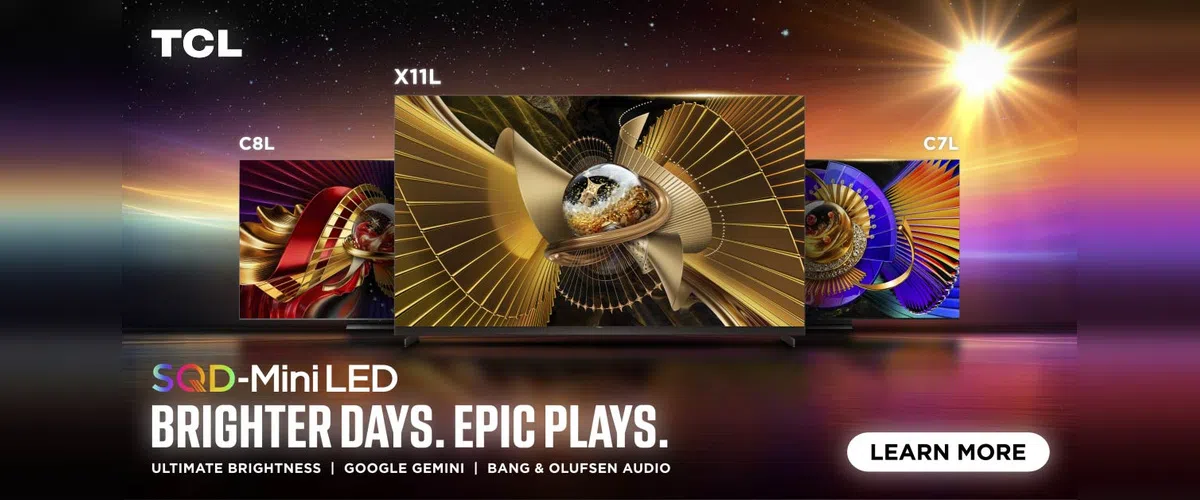
What’s New with Dolby Vision 2 & Why It Matters
Dark Scenes With More Detail
Dolby Vision 2 puts a big spotlight on black levels and shadow detail. Dolby’s talking about “Precision Black” style improvements, aimed at keeping dark scenes rich and dimensional. Think night streets, space scenes, dimly lit dramas, the parts that usually fall apart first when HDR tone mapping gets messy.
HDR That Holds Up In Real Rooms
A lot of HDR looks great in a demo clip, then feels inconsistent at home when the room light changes. Dolby Vision 2 leans into smarter, room-aware behaviour, often described in “Light Sense” terms. The payoff is a picture that stays believable from a sunny afternoon to a lamp-lit evening, without you bouncing between modes every time the light shifts.
Sport & Motion That Looks More Natural
Sport is where HDR and processing can sometimes have a problem. Fast pans, textured grass, crowd detail, bright stadium lights, all in the same shot. Dolby Vision 2 is positioned to improve how motion and detail are handled in those high-action scenes. The aim is keeping movement smooth while preserving the finer details you actually want to see. If you watch live football or F1, this is the upgrade you’ll notice first.
Dolby Vision 2 Vs Dolby Vision 2 Max
Dolby Vision 2 is the core upgrade. It’s designed to make HDR look more consistent and more accurate across a wider range of TVs, using Dolby’s creator-guided processing to map each scene to what your panel can actually do.
Dolby Vision 2 Max is the higher tier. It’s aimed at TVs with the hardware to push the format harder. WIth Dolby Vision 2 Max you get the most impressive version of the improvements, especially around dark-scene control, room-aware performance, and motion handling.
Will You Need A New TV For Dolby Vision 2?
For many people, yes. Dolby Vision 2 is launching first on new 2026 TVs. The simplest path is buying a model that lists Dolby Vision 2 support out of the box.
Updates are possible on some existing TVs, but it’s not something that will be available to many older sets. Dolby Vision 2 relies on the TV’s hardware, processing, and in the Max tier, things like ambient light sensing and higher refresh expectations. If a TV doesn’t have the right building blocks, a software update can’t magically add them.
It’s best to treat Dolby Vision 2 as a model-by-model feature. Look for it on the spec sheet, and assume support can vary by region and by screen size within the same series.
Where You’ll Actually Watch Dolby Vision 2
Dolby Vision 2 is rolling out in stages, so TV support and content support won’t arrive everywhere at once. Early on, it’ll look like this: a handful of new 2026 TVs ship with Dolby Vision 2, then streaming apps and devices gradually light up support over time.
What To Expect At Launch
You might have a Dolby Vision 2-capable TV before there is much Dolby Vision 2-labelled content. That’s normal for a new format. Dolby Vision 2 is designed to work within Dolby’s existing HDR ecosystem, so the experience should still look great with today’s Dolby Vision titles, with Dolby Vision 2 content expanding as services adopt it.
Dolby Vision 2 Vs Dolby Vision Vs Dolby Vision IQ
| Dolby Vision | Dolby Vision IQ | Dolby Vision 2 | |
| What You’ll Notice | Stronger HDR impact and detail on Dolby Vision content | More consistent picture as your room goes from bright to dim | Cleaner dark scenes, steadier HDR in real rooms, better handling for demanding scenes |
| Room Light Handling | Not a core focus | Yes, uses an ambient light sensor where available | Yes, designed to keep HDR looking consistent as room light changes |
| Best For | Most Dolby Vision movies and shows | Bright lounges, open-plan rooms, lights-on viewing | Anyone chasing the newest HDR experience, especially mixed viewing like sport plus movies |
| Availability | Common across many TVs and brands | Depends on TV hardware and implementation | Rolling out on select 2026 TVs first, varies by model and region |
Dolby Vision 2 For TCL In 2026
Dolby Vision 2 is the kind of upgrade that tends to land first on brands that move quickly with new display tech, and TCL has confirmed Dolby Vision 2 support for select 2026 TVs, with availability varying by model and region. The main thing to keep in mind is that support can vary by model and region, especially early on.
If you’re shopping this year and Dolby Vision 2 is on your wish list, the smartest move is to watch for it on TCL’s 2026 spec sheets and product pages as they roll out locally.
Explore TCL’s latest TV range here: https://www.tcl.com/au/en/tvs
Dolby Vision 2 FAQ
Is Dolby Vision 2 Available Yet?
It was announced as part of Dolby’s CES 2026 push, with early rollout tied to select 2026 TVs and partner support. Availability will vary by region and by model.
What’s The Difference Between Dolby Vision 2 And Dolby Vision 2 Max?
Dolby Vision 2 is the core format upgrade. Dolby Vision 2 Max is the higher tier aimed at TVs with stronger hardware support, so it can deliver the fullest version of the improvements.
Will Older Dolby Vision TVs Get Dolby Vision 2?
Some might, via updates, but it won’t be universal. Dolby Vision 2 depends on the TV’s hardware and processing, so support is likely to be decided model by model.
Will Streaming Services Have Dolby Vision 2 Content Straight Away?
Expect a staged rollout. TVs may support Dolby Vision 2 before a wide range of content is labelled for it, especially in the early months.
Does Dolby Vision 2 Help In Bright Rooms?
That’s one of the main goals. Dolby Vision 2 is designed to keep HDR looking more consistent in real viewing environments where room light changes across the day.
Will Dolby Vision 2 Improve Sport?
It’s positioned to. Sport is a stress test for motion, detail, and bright highlights in the same scene, so improvements to processing and motion handling should be noticeable on the right TVs.

Tips

Tips

Sports & Streaming With TCL
2026-09-07
Tips

Tips


What Google TV Brings To TCL Smart TVs
2026-04-15
Tips


The Best Large Screen TCL TVs In 2026
2026-04-01
Tips

Tips


Tips

Tips

Tips

What Size TV Do You Really Need?
2026-02-25
Blog
New Tech

Best TCL TV For Bright Rooms
2026-02-25
Blog
New Tech

Gaming TV Buying Guide 2026
2026-02-25
Blog
New Tech

Tips

Tips

Blog
New Tech

Tips

Tips

Tips

The Ultimate Guide to Air Conditioner Modes
2025-02-26
Tips


Tips

Tips
Tips

Tips
New Tech


New Tech

New Tech

Tips

Tips

Air Conditioner Playbooks

Holiday Season
2023-12-17
Events

Be cool this summer
2023-12-17
New Tech

2023 Black Friday Sales
2023-11-16
Events


Events


The Evolution of TVs: What is a Smart TV?
2023-08-30
Tips


Tips

TCL 2023 TV Product Range Launch
2023-07-25
New Tech

TCL Celebrates New AFL Sponsorship From 2023
2023-07-18
Partnership

MiniLED vs OLED. A comparison
2023-07-11
New Tech

What is Quantam dot technology for Tv's
2023-07-04
New Tech

AFL powered by TCL Electronics
2023-04-13
Partnership


Boxing Day Sales 2022
2022-12-21
Tips

New Tech

Renegades Partner with TCL Electronics
2022-11-29
Events

TV: To Mount or Not to Mount?
2022-11-29
Tips

New Tech

New Tech

New Tech

Looking for a Big Screen TV?
2022-11-08
New Tech

New Tech

New Tech

The C9 Series – TCL's Best 4K TVs
2022-11-01
New Tech

Black Friday Sales Plus Cyber Monday 2022
2022-10-25
Events

Men's T20 Cricket World Cup 2022 Australia
2022-10-25
Events

TCL Sponsors Melbourne Cup 2022
2022-10-18
Events

Is it Time to Upgrade Your TV?
2022-10-04
New Tech

Best Streaming Apps 2022
2022-09-27
New Tech

TCL X9 Series TVs
2022-09-20
New Tech

Events

Men's AFL Grand Final 2022
2022-09-06
Events

IFA


New Tech


2022 TCL TV Range Launch
2022-08-03
New Tech

Google TV vs Android TV
2022-06-06
New Tech

What is Google TV?
2022-06-03
New Tech

MiniLED vs OLED
2022-05-23
New Tech

Watch Australian NRL on Your TCL Television
2022-05-21
Tips

Tips

How to Watch AFL on Your TCL TV
2022-05-14
Tips

TCL Ray Danz Soundbar Reviews
2022-05-10
New Tech

Fridge Buying Guide
2022-05-05
Tips

Tips

Freezer Buying Guide
2022-04-20
Tips

New Tech

Watching Soccer on Your TCL Television
2022-04-11
New Tech

Call of Duty: Vanguard
2022-01-05
New Tech

Soundbar Buying Guide
2021-12-29
Tips

Boxing Day 2021
2021-12-17
Events

The TCL C735 98" TV Overview
2021-12-15
New Tech

New Tech

What is the Ideal TCL TV for You?
2021-12-01
Tips

Smart TV and HD Televisions
2021-11-24
New Tech


TCL Black Friday and Cyber Monday 2021
2021-11-18
Events

TCL's Latest Australian Product Range
2021-11-17
New Tech

Is My TV a Smart TV?
2021-11-03
New Tech

How To Connect A DVD Player To A Television
2021-10-27
New Tech

New Tech

What Is a Mini-LED TV and Do You Need It?
2021-10-06
New Tech

Laser TV: Options, Specifications & Quality
2021-09-29
New Tech

Tips

New Tech

New Tech

New Tech

New Tech

How To Set Up Google Home on TCL TVs
2021-08-30
Tips

New Tech

New Tech

Top Mount Fridge: The Ultimate Buying Guide
2021-08-02
New Tech

Finding the Perfect Bar Fridge
2021-07-26
Tips

Best Budget Sound Bar For Your TV
2021-07-19
Tips

Choosing & Finding Sound Bars For Your TV
2021-07-12
Tips

New Tech

8K TV
2021-06-28
New Tech

Thinking of buying a 4K TV?
2021-06-21
New Tech

Why buy a 75 Inch TV?
2021-06-14
Tips

How to choose the best Smart TV for you
2021-05-31
Tips

Tips

Tips

TV Buying Guide: 6 Things You Need To Know
2021-05-17
Tips

Tips

New Tech

Android or Smart TV - What's the Difference?
2021-03-05
Tips

Top New TV Shows on Stan 2021
2021-02-26
Tips

Australian Sports We Love to Watch
2021-02-19
Tips

Tips

Top 10 Most Expensive TV Shows Ever Made
2021-02-05
Tips


New Tech

Boxing Day Sales in Australia
2020-12-11
Tips

Tips

How to Take Movie Night to the Next Level
2020-11-27
Tips

New Tech

Tips

Black Friday TV Deals
2020-11-06
Tips

Tips

Choosing the Right TCL Soundbar
2020-10-26
Tips

The New TCL X915 8K QLED Android TV
2020-09-15
New Tech

Mounting Your TV: What You Need To Know
2020-08-08
Tips

The New 2020 TCL P715 4K QUHD Android TV
2020-07-24
New Tech

Tips

New Tech

Tips


Tips

Tips

New Tech

How to Successfully Host an AFL Party
2020-03-12
Tips

Product Spotlight: Series X X7 QLED TV AI-IN
2020-02-03
Tips

Tips

Tips

How to Decorate a Room Around Your TV
2019-10-14
Tips

Tips

FIBA Basketball World Cup 2019
2019-08-26
Events

Tips

The Evolution of TV in Australia
2019-07-16
Tips

How to Buy a Premium TV on a Budget
2019-06-26
Tips

New Tech

2019 Q1 Shipment Release
2019-04-17
New Tech

8K TV and the Future
2019-04-01
New Tech

New Tech


New Tech


Events

Great Christmas Tech Gift Ideas From TCL
2018-11-19
Tips

Events

The Melbourne Spring Racing Carnival
2018-10-31
Events

The Perfect Sports and Gaming TV
2018-09-20
Tips

New Tech

Events

What is Chromecast & Why do I Need it?
2018-08-20
Tips

Buying a TV? Which TV Should You Buy?
2018-07-06
Tips


New Tech


Events

QLED vs OLED – What is the difference?
2018-04-10
Tips

Google Assistant & Artificial Intelligence
2018-03-23
New Tech

New Tech

Neymar Appointed TCL Ambassador
2018-02-13
Events

TCL Named CES 2018 Innovation Awards Honoree
2018-01-31
Events

Events

New Tech

Events

New Tech

Tips

Events


Events

TCL Android TV has arrived
2017-06-17
New Tech

5 Reasons Why You Need Netflix
2017-06-08
Tips

5 Reasons Why You Need Smart TV
2017-06-08
Tips

TCL Smart TV & FreeView
2017-06-08
New Tech

Which size TCL TV is best for you?
2017-06-08
Tips

Melbourne Victory partners with TCL
2017-01-17
News

News

Events

News



This site uses cookies to analyse site traffic, improve your experience and personalize ads or other contents. By clicking Accept or continuing to browse the site, you are agree to our use of cookies. See our Cookies Policy here. Learn more